Last week, on September 18, 2015, the EPA issued a News Release revealing that Volkswagen Group of America (“Volkswagen”) sold cars incorporating a “defeat device” as defined in the Clean Air Act (“CAA”) to purposefully evade federal and state emissions and environmental laws and regulations.[1] In this Notice, the agency said that Volkswagen’s software allowed its vehicles to release up to 40 times the level of nitrogen oxides permitted under the CAA without being detected during testing. The EPA’s Notice puts the carmaker on the hook for potential civil penalties and injunctive relief.
The EPA is not the only trouble on the horizon. The U.S. Justice Department commenced a criminal investigation and State Attorney Generals in several states have initiated independent investigations. Class Actions have been filed on behalf of consumers in at least ten (10) different states alleging among other things, violation of the CAA, fraud, unfair competition, breach of express and implied warranties and false advertising.[2] These class actions carve out personal injury claims resulting from the use of VW vehicles incorporating defeat devices, meaning those may pop up separately. Given the decline in the stock price in response to the revelation of fraud, shareholder derivative suits are sure to follow.
The Potential Fallout: Read more ›
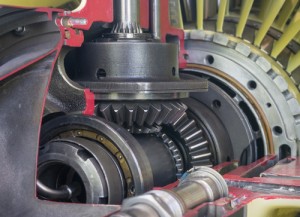 The Seventh Circuit’s recent decision in Thornton v. M7 Aerospace, LP should serve as a reminder to companies that purchase or succeed to assets of a product manufacturer that liability may follow if they do not act cautiously and deliberately on a fully informed basis to protect themselves. Thornton v. M7 Aerospace LP, No. 14-1707 (7th Cir. Aug. 6, 2015).
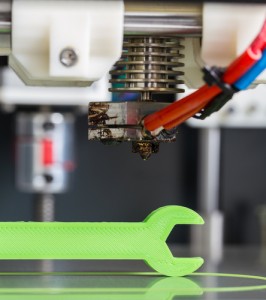 Last year I was honored as the outgoing president of a local bar association and was given a lovely glass award, a proclamation from the mayor, and a 3D printed car. Not a real car mind you, but tiny replica of the Porsche 997. The detail of the car is really remarkable down to its tiny door handles and side mirrors. I can tell you that most people who come into my office are more interested in handling that little car and hearing about how it was made than they are in my fancy glass award or the proclamation (no disrespect to the mayor).
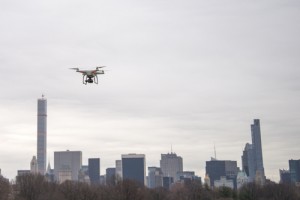 Practically every day there are media reports of Unmanned Aircraft Systems (UAS), commonly referred to as drones, making unfortunate landings at concerts, parades and sporting events. In October of 2014, Albania was awarded a victory in a European Championship soccer match against Serbia when a drone flying an Albania banner flew into the stadium, interrupting play and resulting in an ugly brawl between Serbian and Albanian fans and players. In May of this year, singer Enrique Iglesias attempted to grab a drone at a concert in Tijuana and suffered serious hand lacerations. Just this June, a woman at a parade in Seattle was knocked unconscious when a two (2) pound drone ricocheted off of a building and struck her in the head. Less than two weeks ago a drone flew into in the National Tennis Center in New York during a US Open quarter-final match featuring top seed, Serena Williams. The drone crashed into the seating area interrupting play. In addition to these publicized events, the FAA receives an average of 25 reports per month for near misses between drones and aircraft.

 The compliance date for the new regulations vary, generally depending on the size of the business, between one and three years after publication of the final rule. Thus, generally, businesses with more than 500 employees and more than one million dollars in annual sales per year will have one year to comply with FDA’s new regulations. While the new regulations are lengthy and should be reviewed by food manufacturers in connection with their counsel, this blog post is intended to address a few of the significant aspects of the regulations.